
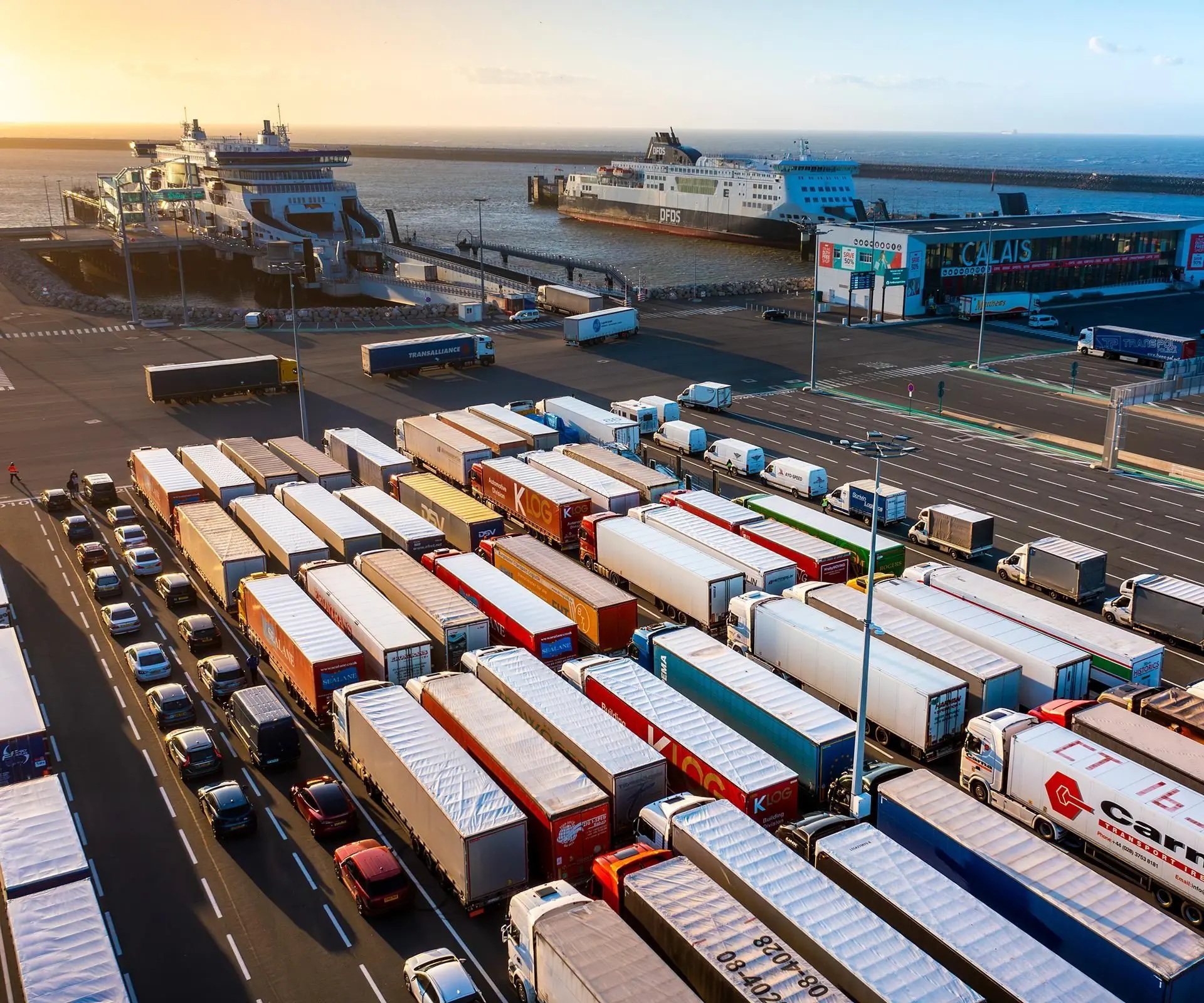
The Republic of Ireland is in the EU, Great Britain isn't, and Northern Ireland follows its own rules under the Windsor Framework. So the paperwork depends on which way your goods are going. This page covers all four directions: UK to Ireland, Ireland to the UK, Ireland to mainland Europe and mainland Europe to Ireland.
At a glance: which rules apply
| Direction | Customs declarations? | Key systems | Typical road transit |
|---|---|---|---|
| Great Britain to Republic of Ireland | Yes, export from the UK and import into Ireland | UK export entry, Irish import entry, PBN before boarding | 1–2 days |
| Republic of Ireland to Great Britain | Yes, export from Ireland and import into the UK | Irish export entry, UK import entry, GVMS (GMR) | 1–2 days |
| Ireland to and from mainland Europe, direct ferry | No, both are in the EU | Standard EU paperwork, such as a CMR | 2–4 days |
| Ireland to and from mainland Europe, via the UK landbridge | Transit declarations through Great Britain | T-documents (NCTS), PBN and GVMS | Often 1–2 days quicker than direct ferries |
| Great Britain to Northern Ireland | Depends on the goods and where they end up | Windsor Framework, green or red lane | 1–2 days |
| Northern Ireland to and from the Republic of Ireland | No customs border | Normal commercial paperwork | Same or next day |
Typical transit for full loads with documents ready. Food, plants and animal products have extra SPS requirements in every direction.
Irish Sea crossings
| Route | Destination | Good for |
|---|---|---|
| Holyhead – Dublin | Republic of Ireland | The quickest crossing for most of England and Wales |
| Liverpool / Birkenhead – Dublin | Republic of Ireland | The North West, Yorkshire and the Midlands |
| Heysham – Dublin | Republic of Ireland | The North of England, often for unaccompanied trailers |
| Fishguard / Pembroke – Rosslare | Republic of Ireland | South Wales, the South West and the south east of Ireland |
| Cairnryan – Belfast / Larne | Northern Ireland | Scotland and the North of England |
| Liverpool – Belfast and Heysham – Warrenpoint | Northern Ireland | The North West and the Midlands |
Operators include Stena Line, Irish Ferries, P&O Ferries, CLdN and Seatruck. Schedules change seasonally.
UK to Ireland
Goods from Great Britain to the Republic of Ireland are exports from the UK and imports into the EU, so you need:
- A UK export declaration, lodged before the goods leave
- An Irish import declaration, lodged with Revenue (Ireland's tax and customs authority) by the Irish importer or their agent
- Safety and security data for entry into the EU
- A pre-boarding notification (PBN) for every lorry or trailer on a roll-on roll-off ferry. Revenue requires a PBN containing the declaration references before the vehicle leaves for the GB port, and a vehicle without one won't be allowed to board
- EORI numbers for both the UK exporter and the Irish importer
- A statement on origin if you want zero tariffs under the UK–EU trade agreement
Irish import VAT, normally 23% at the standard rate, is charged on arrival. VAT-registered Irish businesses can usually use postponed accounting. Goods that don't originate in the UK, such as Chinese goods held in a UK warehouse, generally pay EU duty when they enter Ireland.
Ireland to the UK
In the other direction, the Irish exporter makes an export declaration and the goods need a UK import declaration. Lorries using Holyhead, Liverpool, Fishguard and Pembroke also need a goods movement reference (GMR) from HMRC's Goods Vehicle Movement Service, linking the declarations to the vehicle. UK safety and security declarations apply too.
Ireland to and from mainland Europe
Trade between Ireland and other EU countries is within the EU's single market, so there are no customs declarations. The choice is how to get there.
Direct ferries
Since Brexit, many more direct sailings have been added between Ireland and the continent. Routes include Rosslare to Cherbourg, Dunkirk, Bilbao and Zeebrugge, Dublin to Cherbourg, and Cork to Zeebrugge, plus container services from Dublin and Cork to Rotterdam and Antwerp. Crossings take roughly 18 to 40 hours, but avoid UK customs completely.
The UK landbridge
The landbridge, driving across Great Britain between the Irish Sea and the Channel ports, is often the fastest route between Ireland and mainland Europe. Because the goods pass through a non-EU country, they need to travel under the Common Transit Convention with transit documents, plus the PBN and GVMS steps at the ports. Done properly it works well, especially for urgent and perishable loads, but it relies on the paperwork being right.
- Direct: Dublin – Cherbourg ferry, then road to Lyon
- About 2.5–3 days, no customs
- Landbridge: Dublin – Holyhead, road to Dover, Dover – Calais, road to Lyon
- About 1.5–2 days, under transit
- Choice
- Landbridge for speed, direct ferry for simplicity
Indicative times. The right route depends on urgency, sailing times, the goods and the cost.
Northern Ireland
Northern Ireland follows the Windsor Framework. Goods moving from Great Britain to Northern Ireland that will stay there can often use the 'green lane', with simplified paperwork, if the receiver is registered under the UK Internal Market Scheme. Goods at risk of moving on into the EU use the 'red lane' with full customs declarations. Qualifying Northern Ireland goods moving to Great Britain generally have unfettered access. There's no customs border between Northern Ireland and the Republic. Businesses moving goods into or out of Northern Ireland may need an XI EORI number.
Food, plants and animal products
Agri-food goods have extra SPS requirements in every direction, including health certificates, pre-notification and checks at border control posts. Rules have been changing as the UK and the EU work towards an SPS agreement, so check the current requirements for your product before it moves.
How we can help
Our team's ferry and road background means we know the Irish Sea and Channel crossings and the hauliers who run them. We arrange full loads, part loads and containers between the UK and Ireland in both directions, handle Ireland–Europe freight by direct ferry or landbridge, and handle customs on both sides in-house. See also our customs clearance service.
Written by the 365 Freight team · Last reviewed . Rates, rules and schedules change, so we'll confirm the details for your shipment when we quote.