
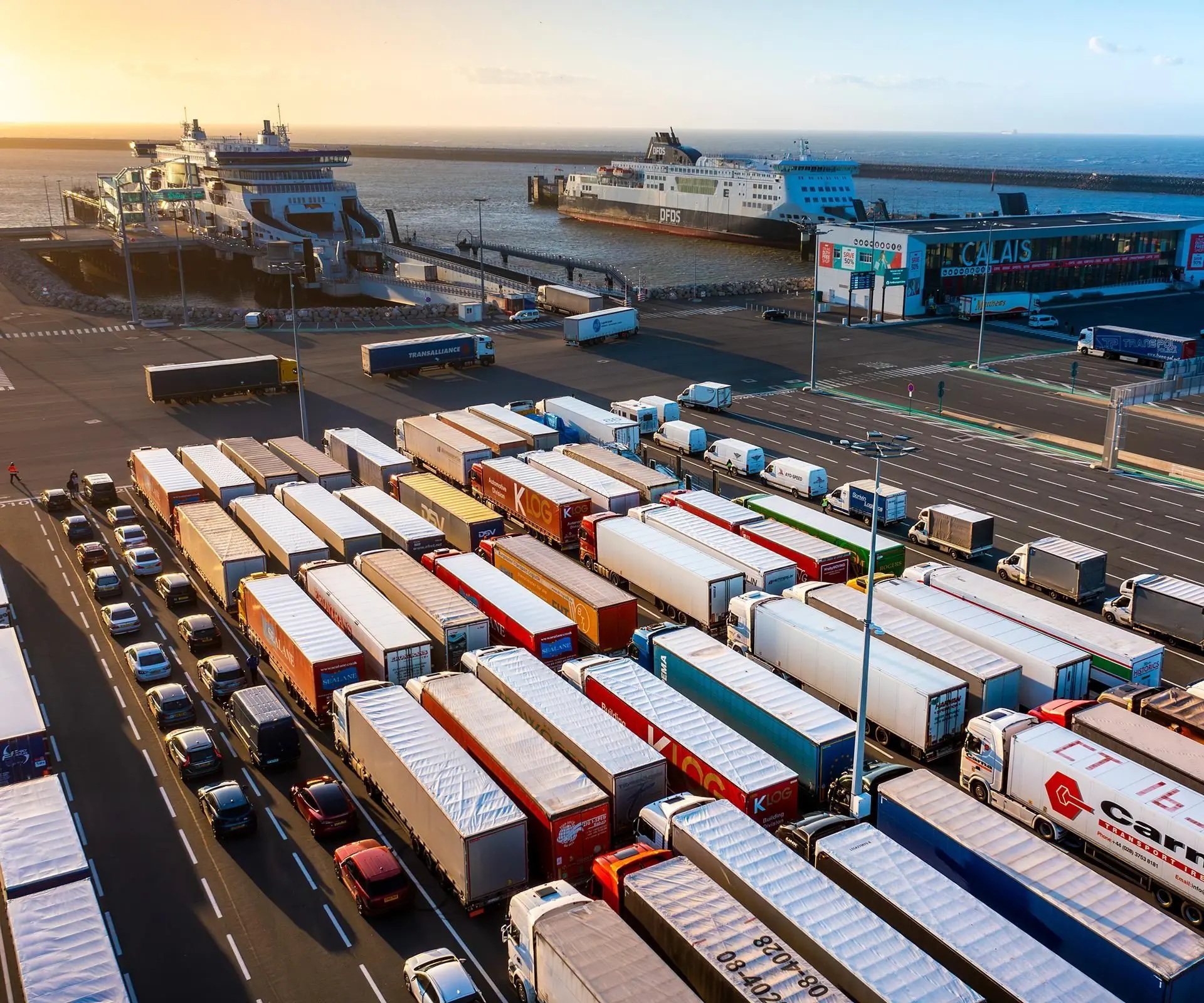
Freight between the UK and France has the most crossing options of any European route, from the short Dover Strait sailings and the Channel Tunnel to longer ferries from the south coast into Normandy and Brittany. The right choice depends on where the goods start and finish, how urgent they are and whether a driver travels with the trailer.
Transit times from the UK to France
| Destination | Full load | Groupage |
|---|---|---|
| Lille and northern France | 1 day | 2–3 days |
| Paris and Île-de-France | 1–2 days | 2–4 days |
| Normandy and Brittany | 1–2 days | 2–4 days |
| Lyon | 2 days | 3–5 days |
| Bordeaux and Toulouse | 2–3 days | 3–5 days |
| Marseille and the south | 2–3 days | 4–5 days |
Typical times with customs documents ready before collection. Weekends, French driving bans, public holidays and Channel queues can add time.
Crossing options
| Crossing | Journey | Best for |
|---|---|---|
| Dover – Calais | About 90 minutes | The most frequent sailings, for accompanied loads |
| Dover – Dunkirk | About 2 hours | Northern France, Belgium and the Netherlands |
| Channel Tunnel (Folkestone – Calais) | About 35 minutes | The fastest crossing, less affected by weather |
| Portsmouth – Le Havre / Caen / Cherbourg / St Malo | Several hours to overnight | The west and south of France, avoiding the M25 and Kent |
| Newhaven – Dieppe | About 4 hours | Normandy and the Paris region from the South East |
Customs between the UK and France
Goods moving between Great Britain and France need export and import declarations, safety and security data and, at Dover and the Channel Tunnel, a GVMS goods movement reference for the UK side. On the French side, the 'smart border' links the customs declarations to the vehicle before it boards, so the driver must have the right references. Goods that originate in the UK or the EU can move duty-free with a statement on origin. Read do I need customs for UK–EU freight?
Wine, spirits and excise goods
Alcohol and other excise goods need extra excise paperwork and duty arrangements in addition to customs, and are often moved under bond. Plan these shipments with us in advance.
Food and plant products
Food, plant and animal products need the right health certificates and pre-notification. Checks are carried out at border control posts on both sides. See our reefer and temperature-controlled service for chilled and frozen loads.
French driving bans and rules
- Lorries over 7.5 tonnes are generally banned from French roads from 22:00 on Saturday to 22:00 on Sunday, and from 22:00 the evening before a public holiday to 22:00 on the day
- Extra summer Saturday restrictions apply on some routes in July and August
- Many French cities have low-emission zones with vehicle access rules
- French public holidays, such as 1 and 8 May and 14 July, affect both deliveries and collections
What we commonly move to and from France
- Food and drink, including chilled and frozen products
- Wine and spirits
- Machinery, parts and industrial goods
- Aerospace and automotive components
- Cosmetics and consumer goods
- Retail and e-commerce stock
- Collection and UK export declaration
- Monday morning
- GVMS reference and smart border references in place
- Before reaching Dover
- Channel crossing
- Monday evening
- Drive through France
- Tuesday
- Delivery near Lyon
- Wednesday morning
- Collection to delivery
- about 2 days
Indicative, for a dedicated or part load with documents ready. A Friday collection would run into the weekend driving ban.
How we can help
With our European ferry and road background, we know the crossings and the hauliers. We'll choose the right crossing for your route and deadline, arrange customs on both sides, and keep you updated until delivery. See our European road and ferry freight service, or how long road freight to Europe takes.
Written by the 365 Freight team · Last reviewed . Rates, rules and schedules change, so we'll confirm the details for your shipment when we quote.