
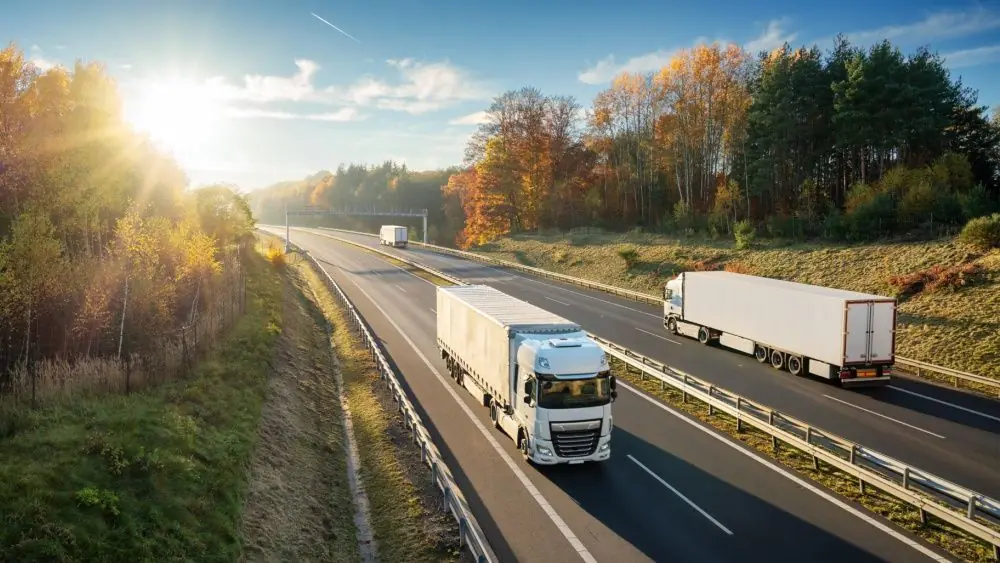
German trade covers everything from car parts and machinery to chemicals and consumer goods. Most loads travel via the Channel crossings and through France and Belgium, or by North Sea ferry to the Netherlands or Belgium, which can be the better choice for unaccompanied trailers and for northern Germany.
Transit times from the UK to Germany
| Destination | Full load | Groupage |
|---|---|---|
| Cologne, Düsseldorf and the Ruhr | 1–2 days | 3–4 days |
| Frankfurt | 2 days | 3–4 days |
| Hamburg and Bremen | 2 days | 3–5 days |
| Stuttgart | 2–3 days | 3–5 days |
| Munich | 2–3 days | 3–5 days |
| Berlin and Leipzig | 2–3 days | 4–5 days |
Typical times with customs documents ready. Weekends, German driving bans, public holidays and port queues can add time.
Routing options
| Route | Best for |
|---|---|
| Dover / Channel Tunnel, then via France and Belgium | Accompanied full loads, fastest to western and southern Germany |
| Harwich – Hook of Holland | Accompanied and unaccompanied loads from the East of England |
| Hull / Killingholme / Purfleet / Teesport – Rotterdam or Zeebrugge | Unaccompanied trailers, northern Germany and regular flows |
Customs and German rules
Goods between Great Britain and Germany need UK and German customs declarations, safety and security data and, at roll-on roll-off ports, GVMS on the UK side. German import declarations are made on the German customs system by the importer or their representative. Goods that meet the UK–EU rules of origin can move duty-free with a statement on origin.
- Truck toll (Maut): Germany charges a distance-based toll for goods vehicles on motorways and federal roads, now including a CO₂ element, which is part of the haulage cost
- Sunday and holiday ban: lorries over 7.5 tonnes are generally banned on Sundays and public holidays from 00:00 to 22:00
- Summer Saturdays: from 1 July to 31 August, extra restrictions apply on Saturdays on busy motorway sections
- Regional holidays: some public holidays apply only in certain German states, which can affect delivery days
What we commonly move to and from Germany
- Automotive parts and components
- Machinery and industrial equipment
- Chemicals and plastics, including dangerous goods by arrangement
- Pharmaceutical and medical products
- Consumer goods, retail and e-commerce stock
- Food and drink, including temperature-controlled loads
Just-in-time and automotive loads
German manufacturers often work to tight delivery windows. For time-critical loads, we use dedicated vehicles, double-manned drivers where needed, and the fastest crossing, with customs prepared before collection so nothing stops at the border.
- Collection and UK export declaration
- Monday morning
- Channel crossing
- Monday afternoon
- Through France or Belgium into Germany
- Monday night and Tuesday
- Delivery in Stuttgart
- Wednesday morning
- Collection to delivery
- about 2 days
Indicative, for a single-driver full load. Double manning can bring this forward.
How we can help
We arrange full loads, part loads and groupage between the UK and Germany, choose the best crossing for each load, and handle customs on both sides in-house. See our European road and ferry freight service and our customs clearance page.
Written by the 365 Freight team · Last reviewed . Rates, rules and schedules change, so we'll confirm the details for your shipment when we quote.